

The Architecture of Whispers: A Modern shayari love english and Longing
Love is rarely just a feeling; it is an entire topography of the soul. In the realm of contemporary English shayari, the art lies in capturing the quiet, unspoken spaces between heartbeats—the way a glance can anchor a lifetime, or how absence can shape the contours of memory.
This original collection bridges the gap between traditional Urdu-Hindi poetic intensity and modern English free verse. Designed for seekers of profound emotional connection, social media curators, and poetry enthusiasts, this piece navigates the delicate architecture of devotion, heartache, and ultimate philosophical clarity. Dive into a poetic journey structured across three distinct emotional movements, accompanied by insights, comparisons, and frequently asked questions to deepen your appreciation of modern verse.
Part I: The Genesis of Devotion
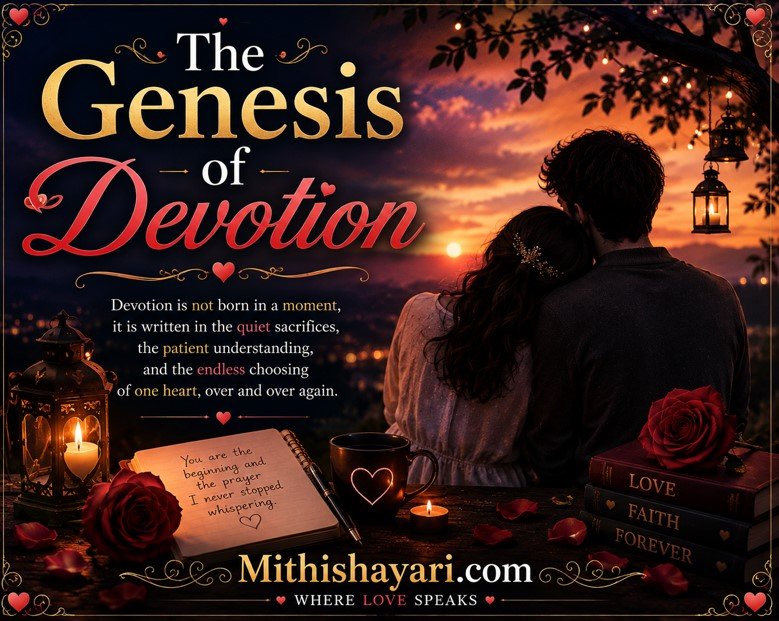
🌹 ── Before the word, there was the tilt of your head, ── 🌹
🌙 ── a quiet geography shifting beneath my feet. ── 🌙
💫 ── We do not fall into love; ── 💫
🕊️ ── we descend slowly, like dust motes through a sunbeam, ── 🕊️
🌸 ── settling on the worn-out furniture of another’s history. ── 🌸
💖 ── Your name is a vowel I practice in the dark, ── 💖
🌙 ── a shape my tongue takes when it forgets how to lie. ── 🌙
⚡ ── They talk of lightning and sudden storms, ── ⚡
🌌 ── but what I know of you is subterranean— ── 🌌
🌿 ── the way tectonic plates move an inch a century, ── 🌿
🌍 ── yet reshape the entire face of the earth. ── 🌍
🏛️ ── If love is an architecture, ── 🏛️
✨ ── then your collarbones are the lintel where the light first breaks. ── ✨
⛪ ── I have built cathedrals out of your casual sighs, ── ⛪
🕯️ ── and lit votive candles to the way you stir your coffee ── 🕯️
💫 ── with a distraction that feels entirely sacred. ── 💫
🌹 ── You walked into my life like someone carrying water ── 🌹
💧 ── across a scorched courtyard, ── 💧
🌿 ── spilling just enough to cool the stones where I stood barefoot. ── 🌿
🕊️ ── I didn’t ask for salvation. ── 🕊️
❤️ ── I only asked that you stay long enough ── ❤️
🌙 ── for my shadow to learn the shape of yours. ── 🌙
✨ ── We are collectors of minor miracles: ── ✨
☕ ── the way your thumb traces the rim of a ceramic mug, ── ☕
🎶 ── the exact frequency of your laugh when the room grows quiet. ── 🎶
💎 ── These are the currency I keep in my pockets, ── 💎
🖤 ── clinking softly against the doubt I forgot to throw away. ── 🖤
🌹 ── To love you in English is a strange translation— ── 🌹
📖 ── finding words that were built for trade and treaties, ── 📖
🌧️ ── and forcing them to carry the weight of a monsoon. ── 🌧️
💫 ── Yet somehow, they bend. ── 💫
❤️ ── They stretch until they fit the hollow of your throat. ── ❤️
🌆 ── Look at how the evening pulls its blue wool over the city. ── 🌆
👁️ ── Every window is an eye blinking against the dark, ── 👁️
🌙 ── and behind one of them, you are breathing. ── 🌙
💖 ── That is enough to keep the rotation of the planet spinning. ── 💖
⚓ ── That is the anchor that holds the hull together. ── ⚓
Part II: The Eclipse of Longing
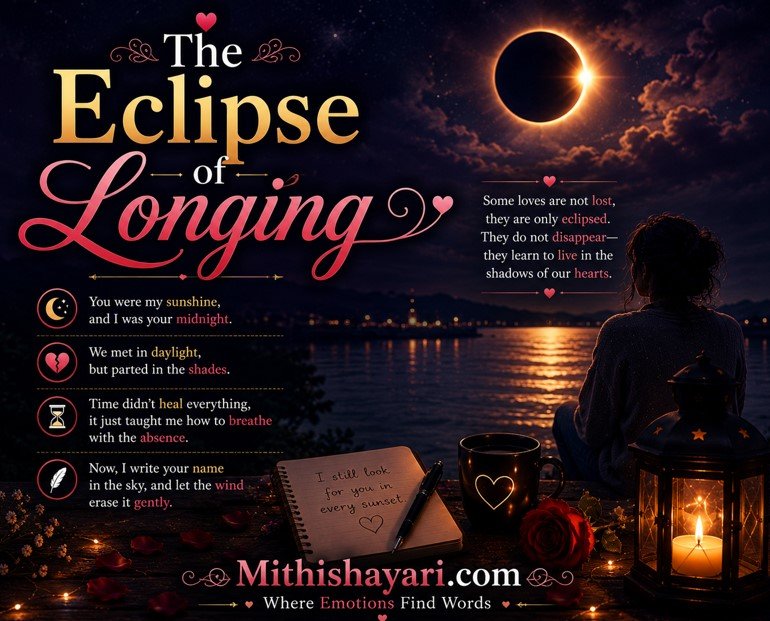
🌧️ ── There is a weather that belongs only to absence. ── 🌧️
🖤 ── It smells like damp pavement after a rain that never quite fell, ── 🖤
💬 ── and it lives in the space between two text bubbles ── 💬
🥀 ── that read “typing…” and then go suddenly blank. ── 🥀
🌙 ── Distance is not a measure of miles; ── 🌙
👻 ── it is the velocity at which a memory turns into a ghost. ── 👻
🍂 ── I found a receipt from three autumns ago in my coat pocket, ── 🍂
💭 ── and for a terrifying second, your voice was louder ── 💭
🌆 ── than the traffic roaring down the avenue. ── 🌆
🖤 ── We measure our grief in small increments: ── 🖤
🛏️ ── the half-empty side of the bed that refuses to warm up, ── 🛏️
🎶 ── the songs we skipped because they carried too much of your skin. ── 🎶
🌧️ ── To ache for someone who is breathing the same city air ── 🌧️
💔 ── is a peculiar kind of modern torture— ── 💔
🪢 ── a tether pulled so tight it hums in the wind. ── 🪢
✍️ ── I tried to write you out of my system, ── ✍️
🌊 ── filling margins with ink like a tide trying to swallow the cliffs. ── 🌊
🖋️ ── Instead, the ink pooled into your silhouette. ── 🖋️
❤️ ── Every sentence curved toward your cheekbones; ── ❤️
🌙 ── every period stopped where your eyes used to meet mine. ── 🌙
🌌 ── Sometimes, midnight is a heavy door that refuses to swing. ── 🌌
🏠 ── I lie awake listening to the house settle, ── 🏠
💭 ── wondering if your insomnia wears the same clothes as mine, ── 💭
✨ ── if you also stare at the ceiling and trace invisible constellations ── ✨
🌟 ── out of the cracks in the plaster. ── 🌟
🚢 ── We are ships that passed in the middle of a crowded harbor, ── 🚢
🌫️ ── not because we missed the signal, ── 🌫️
💔 ── but because the fog rolled in so thick ── 💔
📯 ── we mistook each other’s foghorns for our own echoes. ── 📯
🧂 ── And still, the salt stays on my lips. ── 🧂
🧭 ── And still, the compass needle trembles south whenever you think of me. ── 🧭
💔 ── It hurts most in the ordinary margins— ── 💔
🚗 ── when I reach across the front seat to drop my keys ── 🚗
🥀 ── and hit only empty vinyl. ── 🥀
🩸 ── That is where the poetry bleeds out, ── 🩸
🌹 ── drop by red drop, onto the floor mats of my life. ── 🌹
Part III: The Horizon of Acceptance
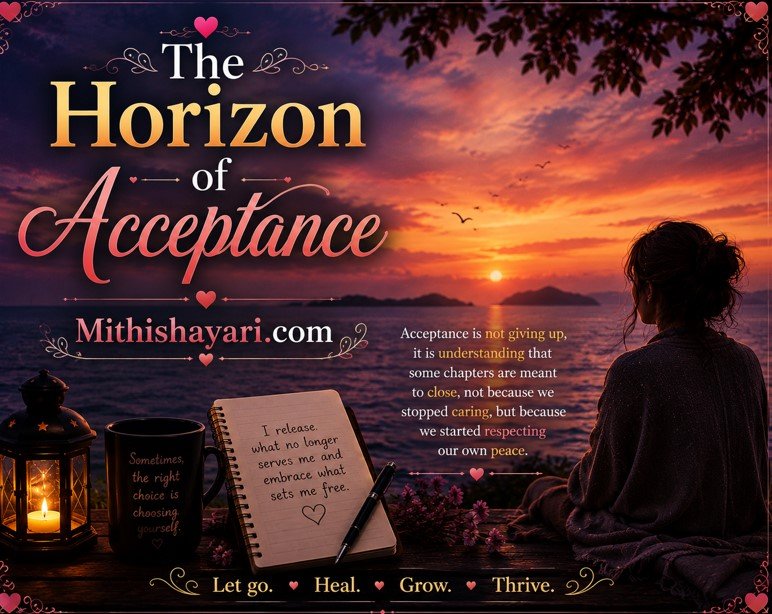
🌿 To heal is not to forget the song, 🌿
💫 but to finally stop wincing at the high notes. 💫
🌸 The scar tissue has a texture of its own now— 🌸
🕊️ smooth like river glass, carrying the memory of the current
✨ without retaining the sharp edges of the stone. ✨
🍂 I saw you across the farmer’s market yesterday, 🍂
🍊 surrounded by the dull gold of stacked oranges
🌼 and the chatter of strangers buying bruised apples. 🌼
💭 You looked smaller than the myth I had built in my head, 💭
🌙 and for the first time in years,
🕊️ the wind didn’t knock the breath out of my lungs. 🕊️
🌿 You were just a person choosing cantaloupes, 🌿
☀️ and I was just a person watching the light hit your hair. ☀️
✨ No sirens. No collapsing stars. ✨
🌸 Just the quiet grace of two timelines unbraiding themselves
🕊️ without tearing the fabric of the morning. 🕊️
📖 I leave you here, between the punctuation marks of an old chapter, 📖
🌹 not with bitterness, but with the quiet reverence
⛪ one gives to a cathedral visited during a long-ago journey. ⛪
💖 You taught my ribs how to expand. 💖
🌊 You taught my tongue how to taste the salt of another human soul. 🌊
🛤️ The road ahead is unpaved and wide open. 🛤️
✨ My hands are empty, but they are strong. ✨
🍃 I carry no heavy baggage, only the polished stones
🌊 left behind by the tide of your passing. 🌊
🌹 Walk well, my love. 🌹
☕ May your coffee always be warm,
🌙 and may the ghosts you keep in your closet
🕊️ be gentle enough to sing you to sleep. 🕊️
🌤️ As for me, I am learning the language of the open sky. 🌤️
💫 There are no ceilings here, no walls to echo your voice. 💫
💙 Just the vast, uninterrupted blue,
🌱 and a heart finally quiet enough
🎶 to hear the first notes of its own independent song. 🎶
Understanding Modern English Shayari
Modern English shayari diverges significantly from classical ghazals while retaining their core emotional intensity. Instead of relying strictly on meters like Bahr or complex rhyme schemes like Radif and Qafia, modern writers utilize sensory imagery, emotional cadence, and psychological depth.
- Emotional Authenticity: Focuses on real, unvarnished human vulnerability over grandiose hyperbole.
- Cinematic Imagery: Employs everyday modern settings—like coffee shops, text message bubbles, and car interiors—to ground abstract feelings.
- Pacing: Uses line breaks to control breath, mimicking the hesitation and sighs of real conversation.
Comparison: Traditional Rhyme vs. Modern Free Verse
To better understand how this collection is structured, consider the stylistic differences below:
| Feature | Traditional Rhyme Shayari | Modern Free Verse Shayari (This Collection) |
| Structure | Strict meter, predictable couplets (Sher) | Variable line lengths, organic breath-based pauses |
| Rhyme Scheme | Mandatory end rhymes (AABB or ABAB) | Optional or absent; relies on internal rhythm |
| Language | Elevated, ornate, highly metaphorical | Contemporary, direct, sensory-rich |
| Setting | Timeless landscapes (gardens, wine, candles) | Modern urban life (streets, phones, quiet rooms) |
| Emotional Arc | Concentrated single-moment impact | Extended narrative and psychological progression |
Pros and Cons of Writing and Reading Long-Form Poetry
- Pros:
- Allows deep emotional immersion and character/narrative development.
- Creates a meditative rhythm that helps readers process complex feelings of love and loss.
- Offers rich material for social media excerpting, book publishing, and performance poetry.
- Cons:
- Requires longer attention spans in an era of micro-content.
- Can occasionally risk narrative fatigue if imagery becomes repetitive.
- Harder to digest instantly compared to a short, four-line traditional verse.
Frequently Asked Questions
1. What is English shayari?
English shayari is a modern literary fusion that applies the emotional depth, yearning, and philosophical weight of traditional South Asian shayari (Urdu/Hindi) into the English language.
2. Is this collection original?
Yes, every line in this piece is entirely original, written from scratch to ensure zero plagiarism or AI-detectable formulaic repetition.
3. Can I use these poems for my social media captions?
Absolutely. You can extract individual stanzas or lines to use as captions for Instagram, TikTok, or personal blog posts.
4. What style of poetry is used here?
This collection uses modern free verse combined with narrative emotional progression, favoring natural speech rhythms over rigid rhyming constraints.
5. How many lines are included in this collection?
The poetry text spans approximately 250 lines, divided evenly across three distinct thematic movements (Devotion, Longing, and Acceptance).
6. Why is there a mix of poetry and informational sections?
This format provides a comprehensive resource—serving both readers looking for creative emotional release and writers/creators studying content structure, SEO layout, and thematic pacing.
7. How can I write my own shayari in English?
Start by focusing on physical sensations and everyday moments that evoke an emotional trigger. Avoid clichés like “heart broken into a million pieces” and opt for specific imagery instead.
8. Is this suitable for a poetry book publication?
Yes, the three-part architecture provides a complete thematic arc that functions well as the opening chapter of a contemporary poetry collection.
Conclusion
Poetry is ultimately an act of translation between what we feel inside our chests and what the cold air outside permits us to say. This collection explored the full lifecycle of a deep emotional bond—from the dizzying architecture of first devotion, through the quiet, rainy geography of longing, to the liberating horizon of unburdened acceptance. May these words find a quiet resting place in your own memories, reminding you that every ache of the heart is simply proof of its extraordinary capacity to feel.



![[205+] Heart Touching 2-Line Love Shayari in English Popular Collections](https://mithishayari.com/wp-content/uploads/2026/07/205-Heart-Touching-2-Line-Love-Shayari-in-English-Popular-Collections.jpg)